
Home › Forums › Patterns & techniques and Tools & materials › Elderflower Soap Recipe (Cold Process)
-
AuthorPosts
-
June 6, 2026 at 7:24 pm #2129
 adminKeymaster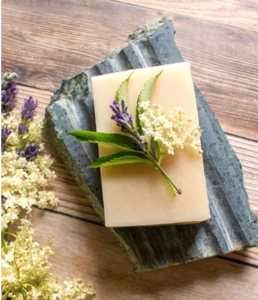
The recipe is very simple and follows standard cold process soapmaking steps. There is no additional soap colourant in the recipe, and the creamy colour of the finished soap comes from the main oils used and the elderflower tea. Though there isn’t a natural elderflower fragrance available, the recipe provides a beautiful floral essential oil blend. It is optional, though, so feel free to leave the essential oils out of your soap if you wish.
Make Elderflower Tea
Before you make this recipe, you’ll first need to make elderflower tea. To do so, place about ½ cup fresh elderflowers (or 2 tbsp dried) in a heat-proof cup or container. Cover with 269 g (9.5 oz) simmering hot water. Let steep for about 30 minutes, then strain and cool completely. Weigh out 255 g (9 oz) for the recipe, adding distilled water as needed to reach the correct weight.
Elderflower Soap Recipe
This elderflower soap recipe is made with all-natural ingredients, including a homemade elderflower infusion. The scent comes from a blend of essential oils that smells fresh and herbal, but not of elderflowers themselves. There isn’t a natural elderflower fragrance available—only fragrance oils. Makes 7 to 8 bars (2.5 lbs/1.13 kg)
Equipment
- medium stainless steel pot (2.5 quart/liter)
- heat-proof jug
- digital kitchen scale
- immersion blender (stick blender)
- silicone spatula
- digital thermometer
- silicone loaf mold (28 oz)
- safety goggles
- gloves (nitrile or rubber)
Materials for one
Lye Solution
- 112 g sodium hydroxide 3.95 oz
- 255 g elderflower tea cooled / 9 oz
Solid Oils
- 227 g coconut oil (refined) 8 oz
- 99 g cocoa butter refined is preferable / 3.5 oz
Liquid Oils
- 298 g extra virgin olive oil 10.5 oz
- 128 g sunflower oil high-oleic is preferable / 4.5 oz
- 43 g castor oil 1.5 oz
Add at Trace
- 5 tsp lavender essential oil 22 g
- 2.25 tsp bergamot essential oil optional / 10 g
- 1 tsp rosemary essential oil optional / 4 g
Instructions
Make the Lye Solution
- Wearing protective gloves and eye-wear, carefully stir the lye (sodium hydroxide) into the cool elderflower tea until dissolved. Work in a well-ventilated area and be careful not to inhale the fumes. Set the lye solution aside to cool for about 30 or 40 minutes or until the temperature drops to around 100 to 110°F (38 to 43°C).
Prepare the Oils
- Gently heat the coconut oil and cocoa butter on low heat until melted. When the solid oils are melted, take the pan off the heat and pour in the liquid oils. This helps cool down the melted oils while warming up the room temperature oils.
Mixing
- Pour the cooled lye solution into the warmed oils. Using a combination of hand stirring and an immersion blender (stick blender), stir the soap batter until it thickens and reaches trace.
Add the Essential Oils
- When the soap batter has thickened to the consistency of warm custard, stir in the essential oil(s) for scent.
Pour in Mold
- Pour the soap batter into your soap mold. Cover lightly with wax or freezer paper, then a towel or light blanket. Peek at the soap every so often; if it starts developing a crack, uncover and move to a cooler location.
Cut and Cure
Keep the soap in the mold for 1 to 2 days, or until it’s easy to remove, then slice it into bars when it’s firm enough not to stick to your cutting tool. Cure on coated cooling racks or sheets of wax paper for about 4 weeks before using. The soap is safe to touch 48 hours after making it, but it needs extra time for the excess moisture to evaporate.
Notes
- Cocoa butter helps add hardness to palm-free soap recipes like this one; if you don’t have any, try using kokum butter, tallow, or lard for a similar effect. Shea butter could also work well.
- If you wish to replace the sunflower oil, try using sweet almond or rice bran oil instead.
- If you don’t have bergamot and rosemary essential oils to create the suggested scent blend, you can replace them with more lavender essential oil.
-
AuthorPosts
You must be logged in to reply to this topic.
